Our hope as educators is to empower students to the best of our ability so that they can complete their secondary education and thrive as they enter society. Unfortunately, not all students finish high school and a majority of these students have been people of color.
Tuscon Unified School District was faced head on by this issue due to their large population of Mexican-American and Latinx students. In 1997 their board of directors voted unanimously to begin implementing a Hispanic Studies Department in their schools in order to combat their dropout rates. Within five years of implementing what came to be known as Raza studies, the graduation rate of Hispanic students had risen to 93% (“Precious Knowledge”). This monumental increase was expected to be met with praise and additional support towards the Raza studies program, however that was not the case.
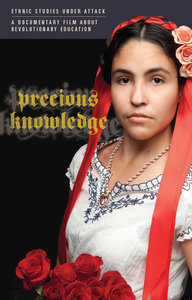
In 2011 a documentary was made, depicting the struggle that Tuscon Magnet High School had faced regarding the extreme backlash against their Raza studies program and the ways in which the students and teachers persisted in implementing their social justice pedagogy while they fought for their Hispanic education.
The documentary follows two Raza studies teachers, Curtis Acosta, who also teaches literature and Jose Gonzales who teaches American Government. Both teachers are passionate about social justice pedagogy that centers upon the search for truth and the power of love. Though the graduation rate was rising and student engagement was growing due to the passion of these teachers and their involvement in Ethnic Studies, the superintendent of schools, Tom Horne, found conflict with the program.
Horne’s argument against teaching Ethnic Studies stemmed from his belief that it was “in conflict with the values of American Citizenship” (“Precious Knowledge”). Unfortunately, many other Arizona citizens bought into Horne’s misconception. Through many legal battles, students from Acosta and Gonzales’ rallied together in peaceful protest in hopes of keeping their beloved Ethnic Studies alive. Their efforts were ultimately quashed when Arizona Governor Jan Brewer signed HB 2281 into law that ultimately banned Ethnic Studies.
Although this story did not have an altogether happy ending, it was a vivid and impactful depiction of the ways in which engaged, invested teachers and culturally empowering classes can make a monumental difference in the lives of students. It is for this reason that it is so crucial to fight for these resources and classes to be accessible for students everywhere.
Giving students new authority and empowerment in their culture is crucial in a country as diverse as the United States. It is up to educators and law makers to fight for the rights and resources for students in order for them to learn, grow, and graduate before they enter the world and thrive.


Thank you for sharing your response to this film. I had not previously heard of it and am now very intrigued to see it. You are so right in your statement that we must “fight for the rights and resources for students in order for them to learn, grow, and graduate before they enter the world and thrive.” It can be daunting, particularly when injustices and road blocks stand in the way. But all we can do is be persistent and continue to do what we can for our kids.
LikeLike